
Studies on selected plants
Study overview:
Yarrow (Achillea millefolium L.)
Angelica (Angelica archangelica L.)
St. John's wort (Hypericum perforatum L.)
Black cohosh (Cimicifuga racemosa L.)
Bearberry (Arctostaphylos uva-ursi L.)
Witch hazel (Hamamelis virginiana L.)
Goldenrod (Solidago virgaurea L.)
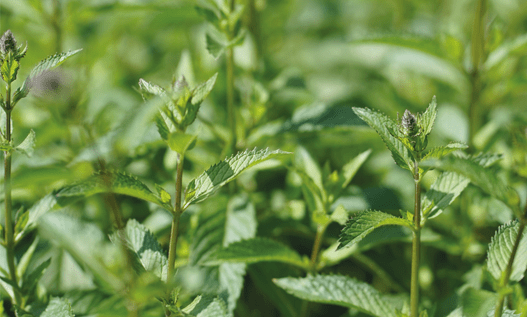
Peppermint (Mentha x piperita L.)
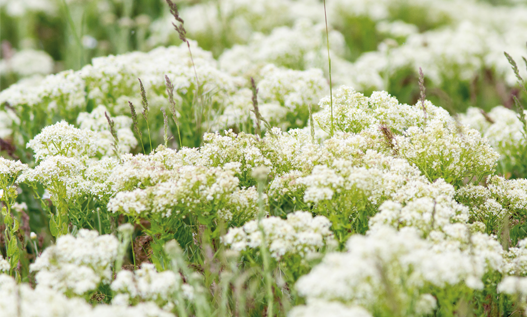
Yarrow (Achillea millefolium L.)
Jenabi E, Fereidoony B. Effect of Achillea millefolium on relief of primary dysmenorrhea: a double-blind randomized clinical trial.
J Pediatr Adolesc Gynecol. 2015;28(5):402–4. doi:10.1016/j.jpag.2014.12.008.
This double-blind, randomized clinical trial investigated the effect of Achillea millefolium L. (yarrow) on primary dysmenorrhea. The results showed that taking yarrow significantly contributed to pain relief during menstruation. Yarrow could therefore be an effective herbal option for treating menstrual pain.
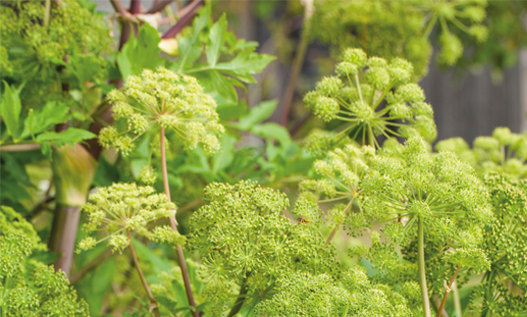
Angelica (Angelica archangelica L.)
Gudmundsdottir H, Olafsdottir ES, Thorsson LO, Gudmundsdottir IB, Bjorgvinsson E, Sigurdsson SB. A parallel, randomized, double-blind, placebo-controlled study to investigate the effect of SagaPro on nocturia in men. BMC Complement Altern Med. 2013;13:218. doi:10.1186/1472-6882-13-218.
This double-blind, randomized study investigated the effect of SagaPro, an extract from Angelica archangelica, on nocturnal urinary urgency in men. While no significant difference from placebo was observed in the overall group, subgroup analysis in men with limited nighttime bladder capacity (NBC index > 1.3) showed a significant reduction in nighttime toilet visits and an increase in functional bladder volume. SagaPro could therefore be particularly beneficial for patients with reduced nighttime bladder storage capacity.

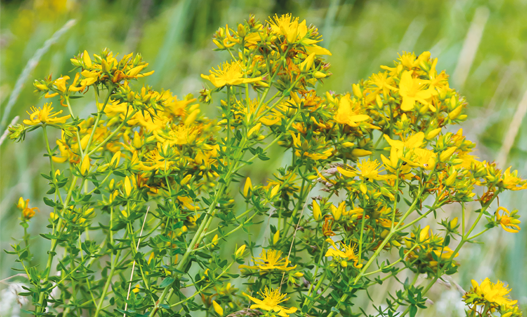
St. John's wort (Hypericum perforatum L.)
Szegedi A, Kohnen R, Dienel A, Kieser M. Acute treatment of moderate to severe depression with hypericum extract WS 5570 (St John's wort): randomised controlled double blind non-inferiority trial versus paroxetine. BMJ. 2005;330(7490):503. doi:10.1136/bmj.38356.655266.82.
In a double-blind, randomized study, the efficacy of St. John's wort extract WS 5570 (Hypericum) was compared with paroxetine in patients with moderate to severe depression. After six weeks, the Hypericum group showed a significantly greater reduction in depressive symptoms than the paroxetine group. In addition, fewer side effects occurred with Hypericum, indicating better tolerability.
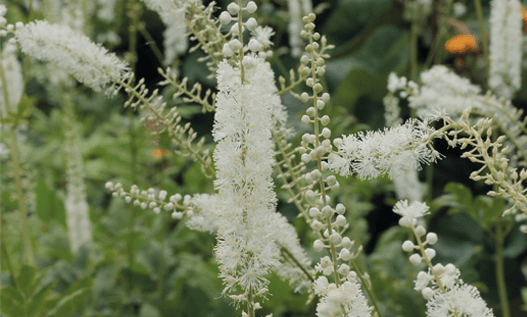
Black cohosh (Cimicifuga racemosa L.)
Wuttke W, Seidlová-Wuttke D, Gorkow C. Physiological investigation of a unique extract of black cohosh (Cimicifugae racemosae rhizoma): a 6-month clinical study demonstrates no systemic estrogenic effect. J Womens Health Gend Based Med. 2003;12(5):463–9. doi:10.1089/154099903322011870.
A six-month, double-blind, randomized study investigated the effect of an isopropanol extract from black cohosh (Cimicifuga racemosa) in peri- and postmenopausal women. The treatment resulted in significant relief of menopausal symptoms, regardless of the dosage (39 mg or 127.3 mg daily). Vaginal cytology and hormonal parameter tests showed no evidence of systemic estrogenic effects, indicating a non-hormonal mode of action of the extract.
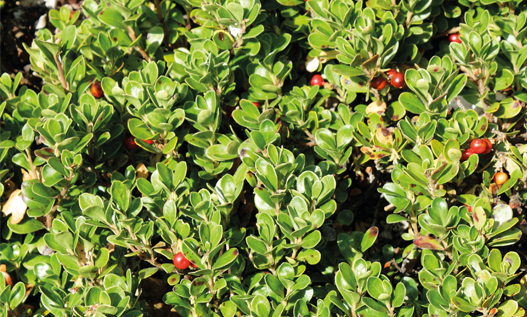
Bearberry (Arctostaphylos uva-ursi L.)
Gágyor I, Bleidorn J, Kochen MM, Schmiemann G, Wegscheider K, Hummers-Pradier E. Herbal treatment with Uva-ursi extract versus fosfomycin in women with uncomplicated urinary tract infection in primary care: a randomized controlled trial. BMC Complement Altern Med. 2015;15:65. doi:10.1186/s12906-015-0603-2.
In this randomized controlled trial, 398 women with uncomplicated urinary tract infections were treated with either bearberry leaf extract (Uva ursi) or a single dose of fosfomycin. The antibiotic-free treatment with Uva ursi significantly reduced antibiotic use but led to a higher symptom burden. Cases of pyelonephritis were also more common in the Uva ursi group. The study shows that herbal therapy can help reduce antibiotic use but should be carefully monitored.
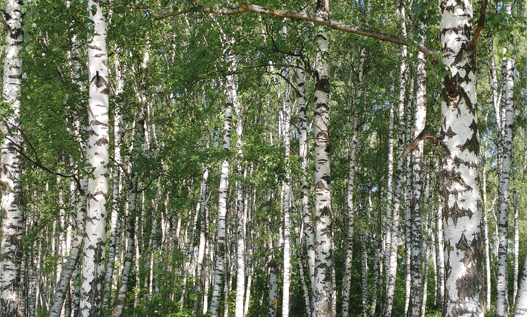
Birch (Betula pendula Roth.)
Szakiel A, Ruszkowski D, Janeczko A. Evaluating birch leaf tea as a functional herbal beverage: phenolic composition, antioxidant activity and mineral content. J Sci Food Agric. 2020;100(3):1159–66. doi:10.1002/jsfa.10120.
In this study, birch leaf tea showed anti-inflammatory and anti-adhesive properties against uropathogenic bacteria. After consumption, numerous active metabolites were detected in the urine, including glucuronides and sulfates of polyphenols. The results support the use of birch leaf tea as a functional beverage to support urinary tract health.
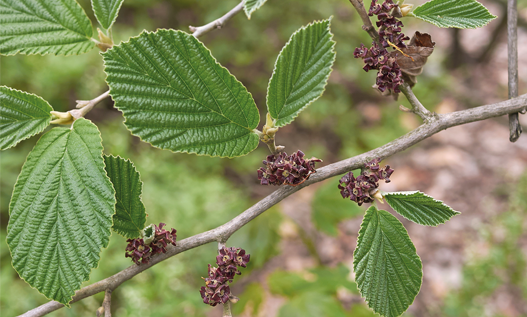
Witch hazel (Hamamelis virginiana L.)
Korting HC, Schäfer-Korting M, Hart H, Laux P, Schmid M. Anti-inflammatory activity of hamamelis distillate applied topically to the skin: influence of vehicle and dose. Eur J Clin Pharmacol. 1993;44(3):315–8. doi:10.1007/BF00280107.
Hamamelis distillate showed anti-inflammatory effects in a study with healthy volunteers, especially when applied in a phospholipid-containing cream (PC cream). The effect was weaker than that of hydrocortisone but stronger than that of the base cream without PC.
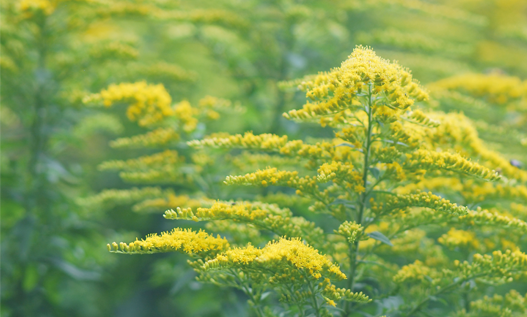
Goldenrod (Solidago virgaurea L.)
Wojnicz D, Tichaczek-Goska D, Gleńsk M, Hendrich AB. Is it worth combining Solidago virgaurea extract and antibiotics against uropathogenic Escherichia coli rods? An in vitro model study. Pharmaceutics. 2021;13(4):573. doi:10.3390/pharmaceutics13040573
An extract from Solidago virgaurea showed antibacterial activity against uropathogenic E. coli and inhibited biofilm formation. However, when combined with the antibiotics amikacin and ciprofloxacin, its effectiveness was reduced, shortening the post-antibiotic effects.
Peppermint (Mentha x piperita L.)
Hamoud R, Sporer F, Reichling J, Wink M. Antimicrobial activity of a traditionally used complex essential oil distillate (Olbas® Tropfen) in comparison to its individual essential oil ingredients. Phytomedicine. 2012;19(11):969–76. doi:10.1016/j.phymed.2012.05.014.
The aim of the study was to compare the antimicrobial effect of traditional Olbas® drops with the effect of their individual essential oil components. Olbas® showed strong in vitro activity against numerous bacteria and yeasts, including multi-resistant pathogens such as MRSA and VRE. Its effectiveness was comparable to that of peppermint oil, a main component of the mixture. The results confirm the potential of Olbas® as a supportive treatment for skin and upper respiratory tract infections.
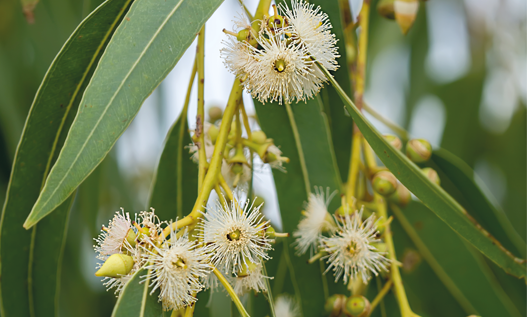
Eucalyptus (Eucalyptus globulus Labill.)
Hamoud R, Sporer F, Reichling J, Wink M. Antimicrobial activity of a traditionally used complex essential oil distillate (Olbas® Tropfen) in comparison to its individual essential oil ingredients. Phytomedicine. 2012;19(11):969–76. doi:10.1016/j.phymed.2012.05.014.
The aim of the study was to compare the antimicrobial effect of traditional Olbas® drops with the effect of their individual essential oil components. Olbas® showed strong in vitro activity against numerous bacteria and yeasts, including multi-resistant pathogens such as MRSA and VRE. Its effectiveness was comparable to that of peppermint oil, a main component of the mixture. The results confirm the potential of Olbas® as a supportive treatment for skin and upper respiratory tract infections.
Cajeput (Melaleuca cajuputi Maton & Sm. ex R. Powell)
Hamoud R, Sporer F, Reichling J, Wink M. Antimicrobial activity of a traditionally used complex essential oil distillate (Olbas® Tropfen) in comparison to its individual essential oil ingredients. Phytomedicine. 2012;19(11):969–76. doi:10.1016/j.phymed.2012.05.014.
The aim of the study was to compare the antimicrobial effect of traditional Olbas® drops with the effect of their individual essential oil components. Olbas® showed strong in vitro activity against numerous bacteria and yeasts, including multi-resistant pathogens such as MRSA and VRE. Its effectiveness was comparable to that of peppermint oil, a main component of the mixture. The results confirm the potential of Olbas® as a supportive treatment for skin and upper respiratory tract infections.